Shiny pretty things to dazzle your living space: Introducing the Baccarat furniture. With Grayson Luxury, there are a lot of options to choose from, such as the Vega Flute, the Swing Plate, and the Arabesque Bowl. The Baccarat USA is a luxury crystal accessory-based furniture provider. Such bold furniture completes your home with crystal clear glass-based home décor accessories. Style it up with colorful coasters and other kitchenware as well as wall décor palette that accentuate the living space with a lot of elegance and jazz.
Confused with what to look for? Here are some of the finest crystal accessories by Baccarat furniture one should not miss:
Baccarat Massena Coupe
The beautiful crystal-embedded Massena Coupe glass is a part of the Massena Bar and Table collection at Grayson Luxury. The intricate detailing and stylizing in the Massena Coupe glass gives out a barrel-like appearance to it. More so, the deep Orgue Bevel Cut beautifies the glass in a highly refined way.
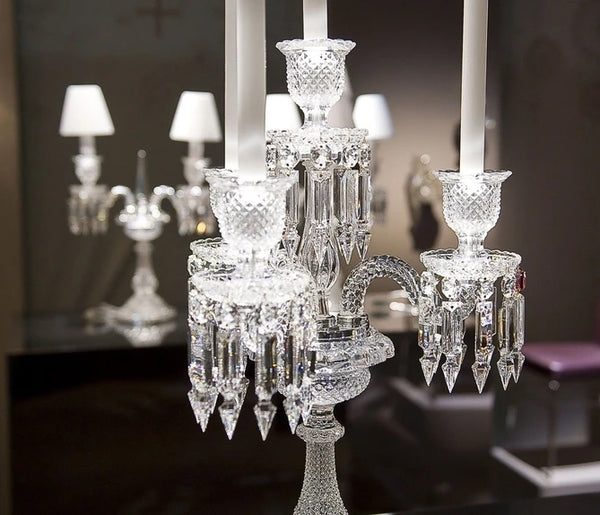
Available in two models, suiting either two or four candles, the Zenith Candelabra has an aluminum foundation as well as crystal detailing near the candle handles. The Zenith Candelabra made of Baccarat Glass can be a beautiful home décor accessory to light up your living space uniquely. It is a classic candelabra with striking features, available at the Grayson Luxury.
The cut Swing Bowl is unique because of its light effect that gives the table décor such a finesse. It is also available in plates, bowls, cups, and chopstick holders. The beautiful Baccarat Swing Bowl can also make a beautiful gift for someone special. It can be used for special dine-in events as well, raising your status as a host. Curated with real crystal, the Baccarat crystal-ware makes a wonderful accessory.
The Baccarat Mille Nuits Plate is a beautiful crystal plate handcrafted with stunning framework and details. Designed by Mathias for Baccarat, the Milles Nuit Plate is a reference inspired from the 1001 Tales of Arabian Nights. Mix it up with other crystal accessories from Grayson luxury for your next dine-in event and have a good time with family and friends.
Take a look at various furniture solutions including tables, dressers, and many more at Grayson Luxury. Visit Grayson Luxury to explore the most amazing collection of luxury Italian furniture and other luxurious home décor accessories. We, at Grayson Luxury, are offering complimentary online e-design services and luxury outdoor furniture. We cater to all your requests, from fabric samples, catalog shipments, CAD designs, to inspirational boards. Our designers are always ready to accommodate any requests virtually.
Working from home has made a lot of us stare at our desks a little too long and think, “Okay… this isn’t really working.” A desk sounds like the easiest thing in the world to buy, and then you start looking around and realize there are way too many types. Drawers, no drawers, huge ones, tiny ones, curved edges, straight edges, it turns into this whole situation where you are just browsing and browsing.
And the worst part is, most of those perfectly clean setups online don’t actually reflect how real people work. They just don't.
So the simplest way to think about it is this: find a desk that can handle your daily things without squeezing the room. Once that part feels right, the rest is just personal taste.
1. The Surface Area Trap: It’s All About Density
Everyone focuses on the length of the 40-inch desk versus the 48-inch desk. But the depth of the desk is where the real function lives.
Think about your monitor setup. If you have a decent-sized screen, you need about 25 to 30 inches of space between your face and that screen to keep your eyes and neck happy. If your desk is only 22 inches deep, you are leaning in. All. Day. Long. That’s why you’re getting headaches, probably.
If you are a true minimalist, just a laptop and a notebook, then yeah, maybe you can survive with a shallow surface. But if you have dual monitors — and honestly, who is working efficiently without two monitors now? — you need depth. Look for a 28 inches deep minimum.
And think about the shape. A straight rectangle is fine, sure. But if you can swing it, check out a curved desk. The curve actually puts the desk closer to you in the center. It sounds weird, but it uses space way better. All your stuff, your phone, your pen cup is right there, closer to your body. You don't have to roll your chair back and forth every time you need to grab something.
2. Storage: Beauty or Bulk
Okay, you need storage. Everyone does. The question is: Do you want it baked in, or separate?
Integrated Drawers
An office desk with drawers is the simplest choice. It organizes everything right where you sit. The downside? That visual density we talked about. A heavy desk with multiple drawer pedestals can make a smaller room feel instantly choked. You need to be sure the drawers offer high-quality, full-extension glides. If they only pull out halfway, they’re useless, and you'll regret the purchase every time you fish for a stapler in the back.
Separate Storage
This approach gives you flexibility. You can use a minimalist floating top and pair it with a rolling credenza or file cabinet. You can slide the storage unit completely out of sight. This strategy is fantastic for people using a 2-person desk in a shared space, as it allows both users to customize their own storage instead of sharing central drawers. This method keeps the desk surface itself light and airy.
Slight tangent, if you are going the U-shaped desk route, the storage is generally massive and built-in. That's a true command center, but please, measure twice. They are huge.
3. Height: The Fixed vs. Flexible Headache
Let's address the elephant in the room: adjustable height desks.
They're great! They let you stand up, which is critical for your body. But they also cost more, and they introduce another point of mechanical failure. If you decide on one, you must prioritize stability. A wobbly sit-stand desk, even when locked at the standard desk height, is maddening to work on. Look for steel construction and highly-rated motor systems.
If you’d rather stick with a regular desk, that’s totally fine. You can still make it comfortable. The standard height — around 29 to 30 inches — works for a lot of people, but not everyone. What really matters is how you sit at it. Your feet should hit the floor without you stretching or tucking them weirdly, and your arms should rest on the surface without lifting your shoulders.
Most of the time, the desk isn’t the problem — the chair is. You can raise or lower the chair, add a footrest, or use a little keyboard platform if things still feel off. It’s basically about adjusting everything around the desk until your body feels relaxed instead of strained.
4. Size Specifics and Practicality
If you live in a small space, every single inch is an argument. While a 36-inch desk might seem minuscule, it's actually perfect for a tight corner if your workflow is primarily digital and you use only a laptop. It forces you to keep things clean. Which, let's face it, we all need.
But if you're relying on more than a laptop — maybe a printer, a second screen, or a charging setup — that’s usually the point where a 48-inch desk makes much more sense. Trying to put real work gear onto a tiny surface just creates cable spaghetti and massive frustration. It's not worth the stress.
And instead of getting caught up in the names or categories. Just think about the actual mechanics.
Will your big, rolling office chair actually fit underneath the table, or will the armrests constantly ram into the drawer fronts?
Can you open the drawers all the way without hitting the wall behind you? That sounds obvious. But people forget.
And this is the big one: Does the look of it actually make you feel better about sitting down? Or is it giving you 1990s cubicle flashbacks?
That feeling (that non-measurable, messy human calculus), that’s the most important part.
5. The Forgotten Stuff Nobody Mentions
Cable management
Leave a little space behind the desk so cables aren’t impossible to reach. Built-in cutouts help, but even a simple cable tray works wonders.
Materials
Laminate is budget-friendly, veneer looks better, solid wood lasts longer, and glass desks look cool but show every fingerprint known to mankind.
Weight capacity
If you use monitor arms or heavier tech, check the numbers. Some desks aren’t built for that kind of load.
Assembly
Some desks take ten minutes. Some take an afternoon and three tools you didn’t know you needed. It’s worth glancing at reviews for that.
Conclusion
If you're still reading, you're overthinking it. Desks are simple until you actually need one. There's no secret formula here.
What’s important is: The desk shouldn't annoy you. It must fit your monitor. It shouldn't bruise your knees.
You will spend an absurd number of hours on this desk. Pick the one that stops fighting you. Once the main desk is right, the rest - the filing, the cables - it sorts itself out. Stop clicking. Go buy the desk.
There is a distinct difference between a room that feels "furnished" and one that feels "designed"—and the secret often lies in the strategic use of mirrors. More than just accessories, mirrors are architectural multitaskers: they are masters of illusion, doubling natural light and correcting a room's proportions by adding depth. A statement mirror acts as dynamic wall art, with the frame defining the room's style. When choosing a quality piece from a curated collection, like Grayson Luxury, you find an element that doesn't just reflect the room, but actively defines your home's sophisticated interior.
We collect all kinds of things. Figurines, fine china, travel souvenirs, old family pieces, it’s a huge range. But regardless of the objects, there comes a point where those items need a place. They need to be safe, visible, and certainly not just tucked into a box somewhere. A storage display cabinet, then, feels like the immediate, obvious answer. The problem is, once you start browsing, you realize they are truly not all built the same. Some cabinets feel more decorative than practical; some are heavy and aggressively traditional. Others, frankly, look like they belong in a gallery, which is lovely, but maybe not the aesthetic you want for your dining room.
So, choosing the right display cabinet takes genuine consideration, especially since this piece is meant to function for years.
Understanding Your Collection First (Then Everything Else Follows)
Before you shop, you need to know the specifics of what you're displaying. Not the sentimental value, we are talking about the physical reality.
Porcelain and old china don’t behave like resin figurines at all. They’re sensitive to temperature shifts, light, and even small movements. If that’s what you’re displaying, you’ll want a cabinet that stays stable and sealed. Stronger pieces (modern models, resin, mixed materials) can sit comfortably in open or lighter cabinets.
Measure everything. Your largest piece, your smallest piece, the average width. Note if anything has a very unique shape. Stack your items the way you're planning to display them, then measure that configuration. Add space around each piece; crowding creates absolute visual chaos and makes pieces harder to appreciate individually.
Also consider growth. Most collectors don't stop. If you've spent five years building this collection, you'll probably spend another five adding to it. Buying a cabinet that's already full wastes money. Leave 20-30% empty space for future acquisitions. In the future you will be grateful.
Room Placement Determines Half of the Battle
A beautiful cabinet in the wrong room, in the wrong corner, positioned awkwardly against the wall, is just wasted potential. Start by honestly assessing where this cabinet will live.
Measure the space in detail. Width, height, depth, everything.
Take into account baseboards, crown molding, electrical outlets, light switches.
Check if doors swing into the space.
Will opening a nearby door or window hit the cabinet?
Can people walk past it comfortably without squeezing by?
Then there is the lighting.
Natural light is complicated. It looks beautiful in the morning, sure. But if you park a collection of vintage comics or textiles next to a bright window, the sun is going to destroy them. UV exposure is slow, quiet damage. It fades colors and weakens materials. If the window spot is the only option, you are stuck paying for UV-protective glass. It costs more, but the alternative is a ruined collection.
Consider sightlines too. A display cabinet in the dining room should be visible from the table where people eat. Living room cabinets work best where guests naturally look when they sit down. Kitchen display cabinets work best at eye level but should be far enough from heat and steam.
The Glass and Shelf Situation
Display cabinets for collectibles usually have glass doors and adjustable shelves. This is standard because it works, glass doors protect your collectibles from dust and casual handling, and adjustable shelves help accommodate different collection sizes as well as shapes.
Glass requires cleaning. Fingerprints, dust, smudges. If you hate cleaning, tempered glass is your friend. Why? Because it resists fingerprints better. Regular glass requires constant maintenance. Accept this before you buy. The payoff is visibility; you see your entire collection clearly without opening the door.
Adjustable shelves matter because collections aren't uniform. Larger pieces need deeper shelves. Delicate stacked items need less height between shelves. Standard fixed shelving forces compromises. With adjustable shelves, you customize the interior to match your actual collection, not the other way around.
UV-protective glass matters more than it initially seems. This isn't optional for valuable items near windows. Standard glass transmits UV rays that cause fading and deterioration. UV-protective options block 99% of harmful rays. Cost difference? Usually $100-$300 depending on cabinet size. Insurance cost of damaged collectibles? Substantially higher.
Lighting Changes Everything About Appearance
A cabinet's interior lighting makes the difference between "okay display" and "people notice this when they enter the room."
LED lighting is standard for new cabinets. It produces minimal heat ( which is important for sensitive items), consumes less electricity, and lasts much longer than incandescent options.
Interior lighting positioned along the top or sides highlights items and minimizes that irritating glare on the glass.
Spot lighting or accent lighting draws attention to specific pieces. If one item in your collection is the crown jewel, directional lighting emphasizes it. Diffused lighting across multiple shelves creates even visibility of the entire collection.
Some cabinets come with built-in lighting. Others don't. If yours doesn't and you want to add it, retrofitting costs money, usually $70-$120 per hour for electrician labor, plus fixture costs. Budget this into your decision. A cabinet that needs retrofit work becomes significantly more expensive than the purchase price suggests.
Style Integration Into Your Actual Space
Contemporary cabinets have minimalist lines, usually metal frames, often black or brushed nickel finishes. These work in modern homes but look out of place in traditional spaces.
Classic cabinets feature wood frames, panel doors, sometimes carved details. These fit traditional and transitional interiors. Wood tones range from light to dark, so matching existing furniture is possible.
The mistake most people make is choosing whatever looks impressive online without considering how it functions in their actual home. Grayson Luxury offers both minimalist and traditional designs. Pick what belongs in your space, not what you think should belong.
Color matters too. A dark wood cabinet in a light, airy room creates visual weight that changes the space's feeling. A light cabinet in a dark room gets lost. This isn't trivial, your cabinet will occupy a visible area. Make sure it's proportionate to the room's aesthetic.
Functional Storage vs. Pure Display
Some cabinets offer hybrid configurations - display shelves in the upper portion, concealed storage drawers below. This works if you want to keep certain items accessible without displaying them prominently. Serving dishes you use occasionally, tablecloths, decorative items you rotate seasonally, these fit in lower storage.
Soft-close mechanisms are worth considering if you want durability. Slamming cabinet doors eventually damages hinges and glass seals. Soft-close hardware prevents this, but adds cost to the purchase.
Material Selection and Build Quality
Glass shelves cost more than standard shelves, but they're more visible and aesthetically refined. Light passes through them, creating visual continuity. Metal and wood shelves are more affordable, more durable for heavy items, but less elegant visually.
Frame material affects longevity. Metal frames (especially aluminum or stainless steel) resist warping and moisture better than wood. Wood frames are warmer aesthetically but require maintenance to prevent humidity damage.
Panel thickness and hinge quality determine how well doors close over time. Thin glass panels vibrate when doors close, creating movement that damages items inside. Thicker tempered glass eliminates this problem but increases cost significantly.
The Reality of Arrangement (Don’t Overstuff It)
There is a weird instinct to fill every inch of a shelf. You paid for the storage, so you naturally want to use the storage.
Resist that.
Empty space is not wasted space. If you crowd a cabinet, it stops looking like a collection and starts looking like inventory. Or worse, clutter. When a display cabinet with glass doors and shelves is packed to the brim, individual pieces disappear in the visual noise.
Grouping helps, obviously. Keep the eras together, or the colors. And play with the height, like tall things in the back, shorter things in front. It prevents the display from looking flat.
But the biggest factor is negative space. You have to leave gaps. It requires the ultimate restraint (which is actually quite difficult when you have a lot of stuff), but that "air" around the objects is what makes them look important. A shelf at 70% capacity looks curated. A shelf at 100% capacity just looks full.
What You're Actually Paying For
Most of the price comes down to the basics -
the frame
the glass
the hinges that won’t loosen in a year
shelves strong enough to hold your heavier pieces
That’s why one cabinet is a few hundred dollars and another jumps into the thousands. You’re paying for how well it’s built.
Extra features add to the total. UV-protective glass, upgraded lighting, or soft-close mechanisms each raise the price of the cabinet a bit. And if you’re planning to mount the cabinet or add electrical lighting, then you will need to factor in installation fees as well.
Conclusion
A display cabinet changes the psychology of a collection. It shifts your collection from “stuff I own” to something you actually look at every day. Just pick one that fits your room, your budget, and the way you plan to use it. Set it up the way you like, and enjoy seeing your pieces finally get the space they deserve.